



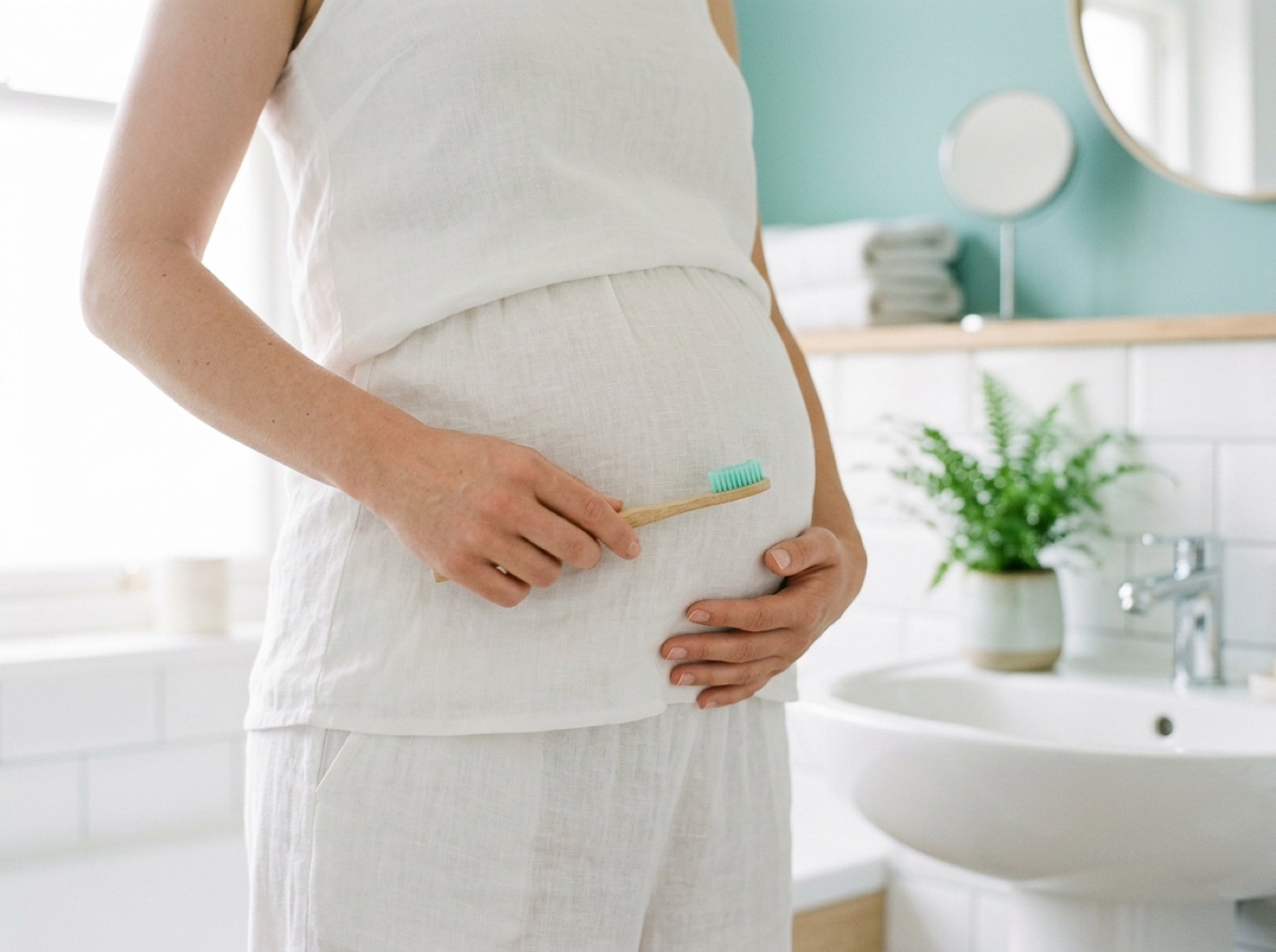
A pregnancy brings many changes, including in your mouth. Hormones, nausea and different eating habits can affect your teeth and gums. With attention and a good routine you can keep your mouth healthy. In this article you can read what to look out for.
Why do your gums change during pregnancy?
Because of hormonal changes, the gums can react more strongly to plaque. Many pregnant women notice that their gums become red, swollen or bleed more easily, especially when brushing or flossing. This is called pregnancy gingivitis. It is a common form of gum inflammation and can often be managed with careful oral hygiene. If your gums keep bleeding or become painful, have them assessed.
How do you care for your teeth during pregnancy?
- Brush twice a day for about two minutes with a fluoride toothpaste
- Use a soft toothbrush and brush gently along the gum line
- Clean between your teeth daily with floss, interdental sticks or interdental brushes
- Limit sugary snacks and soft drinks
- Drink water regularly, also if your mouth feels dry
- Visit your dentist or hygienist for a check-up and cleaning
Do you often suffer from vomiting or acid reflux? Then stomach acid reaches your mouth, which can temporarily soften the enamel. In that case do not brush straight away, but wait about half an hour.
What can you do about nausea and vomiting?
- 01
Rinse your mouth with water Right away
Rinse straight after vomiting with water, optionally with a pinch of baking soda dissolved in it, to dilute the acid.
- 02
Wait before brushing Wait
Brush only after about 30 minutes, so that you do not damage the softened enamel.
- 03
Use fluoride Protection
A fluoride toothpaste or fluoride mouthwash can help protect the enamel. Ask your dentist what suits you.
- 04
Choose a mild flavour Comfort
Does your usual toothpaste or the toothbrush in your mouth make you feel sick? Try a milder flavour or a smaller brush.
Practical tip: tell your dentist that you are pregnant, even if it is still early. They can then take your situation into account, for example with X-rays, medication and the position of the chair.
Can you go to the dentist while pregnant?
Yes, a check-up and cleaning are generally possible during pregnancy and are actually wise, because gum problems are more common then. Acute complaints such as pain or an infection are better not postponed, since an untreated infection is also a burden. Extensive or non-urgent treatments are sometimes postponed, preferably until after the birth. Your dentist decides on timing, anaesthetic, X-rays and medication in consultation with you and, if needed, with your midwife or GP. Do not take medication or painkillers without consulting them first.
When is it wise to visit the dentist?
Make an appointment if your gums keep bleeding, a bump or lump appears on the gum, you have toothache or swelling, or you are left with a bad taste in your mouth. The earlier a complaint is seen, the easier it is usually to treat. A planned check-up early in pregnancy, or even before pregnancy, is a good idea. If you have doubts about the safety of a treatment, discuss it with your dentist, midwife or GP.
Frequently Asked Questions
IMPORTANT NOTE
This content is for informational purposes only; it does not substitute personal medical advice, diagnosis, or treatment. Your personalized treatment plan will be determined after a clinical examination by Mondzorg HS dentists.