



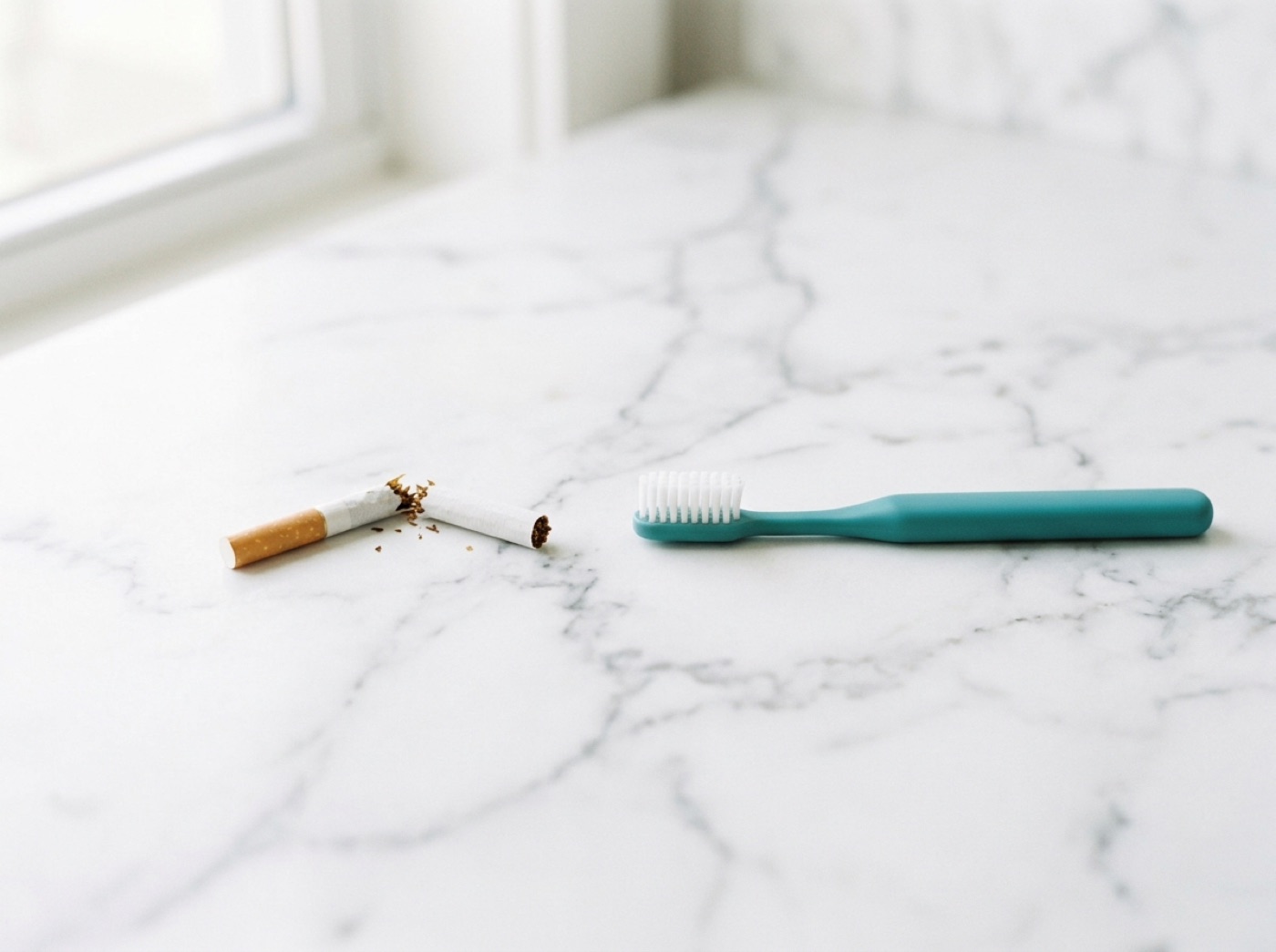
It is well known that smoking harms the lungs, but your mouth notices it too. Teeth, gums and the way small wounds heal can all be affected. And as far as your mouth is concerned, vaping is not a free pass. In this article you can read what happens and what you can do about it.
What does smoking do to your teeth and gums?
Tobacco smoke contains many substances that can affect the mouth. Smokers often have more plaque and tartar, and their gums may receive less blood flow. As a result the gums react differently to inflammation: they sometimes bleed less, so a problem is noticed later. In the long term, gum inflammation can develop into periodontitis, in which the supporting tissue around the teeth is damaged. In general, smoking is regarded as an important risk factor for gum problems.
Which problems are common in smokers?
- Yellow or brown staining of the teeth and along the gum line
- Persistent bad breath
- More tartar and plaque
- Receding gums and sensitive tooth necks
- A reduced sense of taste and smell
- A higher risk of gum disease and loss of teeth
- Poorer healing after an extraction or surgery
It is also important to know that tobacco is linked to changes in the lining of the mouth. Always have a spot or sore in the mouth that does not heal within about two weeks checked by a dentist or GP.
Is vaping better for your mouth?
E-cigarettes generally contain no burnt tobacco, but that does not mean they are risk-free. The vapour often contains nicotine, which reduces blood flow to the gums. The liquids can also cause a dry mouth and influence the bacteria in the mouth. Research into the long-term effects is still ongoing, so caution is appropriate. Do not regard vaping as a proven safe alternative for your oral health.
Smoking, vaping and healing after treatment
Nicotine narrows the blood vessels, so less oxygen and fewer nutrients reach the wound. This can slow recovery after a tooth extraction, gum treatment or implants and increase the chance of complications. With an implant, smoking can also contribute to inflammation around the implant. Discuss with your dentist beforehand whether you can temporarily cut down or stop, even if you are used to vaping.
Practical tip: if you cannot stop completely right away, try at least to avoid smoking or vaping for a number of days around a treatment such as an extraction or an implant. Ask your dentist about the best timing.
How can you protect your mouth if you smoke or vape?
- 01
Brush twice a day Basics
Use a fluoride toothpaste and brush for about two minutes, including along the gum line.
- 02
Clean between your teeth Interdental
Use floss, interdental sticks or interdental brushes daily to clear away plaque.
- 03
Drink enough water Hydration
Water helps against a dry mouth, which is more common with smoking and vaping.
- 04
Schedule regular check-ups Check-ups
Have your gums and the lining of your mouth checked. Your dentist or hygienist can remove tartar and spot problems early.
- 05
Ask for help to quit Quitting
Your GP, pharmacy or a stop-smoking programme can support you.
What does quitting do for your mouth?
It is never too late to stop. Over time the gums can often recover better, breath can become fresher and the chance of complications after treatment becomes smaller. Staining does not always disappear by itself, but your dentist or hygienist can remove tartar and surface deposits. What is realistic in your situation is best discussed in person.
When is it wise to visit the dentist?
Make an appointment if your gums bleed, recede or are sore, if you feel teeth moving, if you have persistent bad breath, or if you notice a white or red patch, an ulcer or a lump in the mouth that does not go away. The earlier a change is seen, the better the options for treatment.
Frequently Asked Questions
IMPORTANT NOTE
This content is for informational purposes only; it does not substitute personal medical advice, diagnosis, or treatment. Your personalized treatment plan will be determined after a clinical examination by Mondzorg HS dentists.