



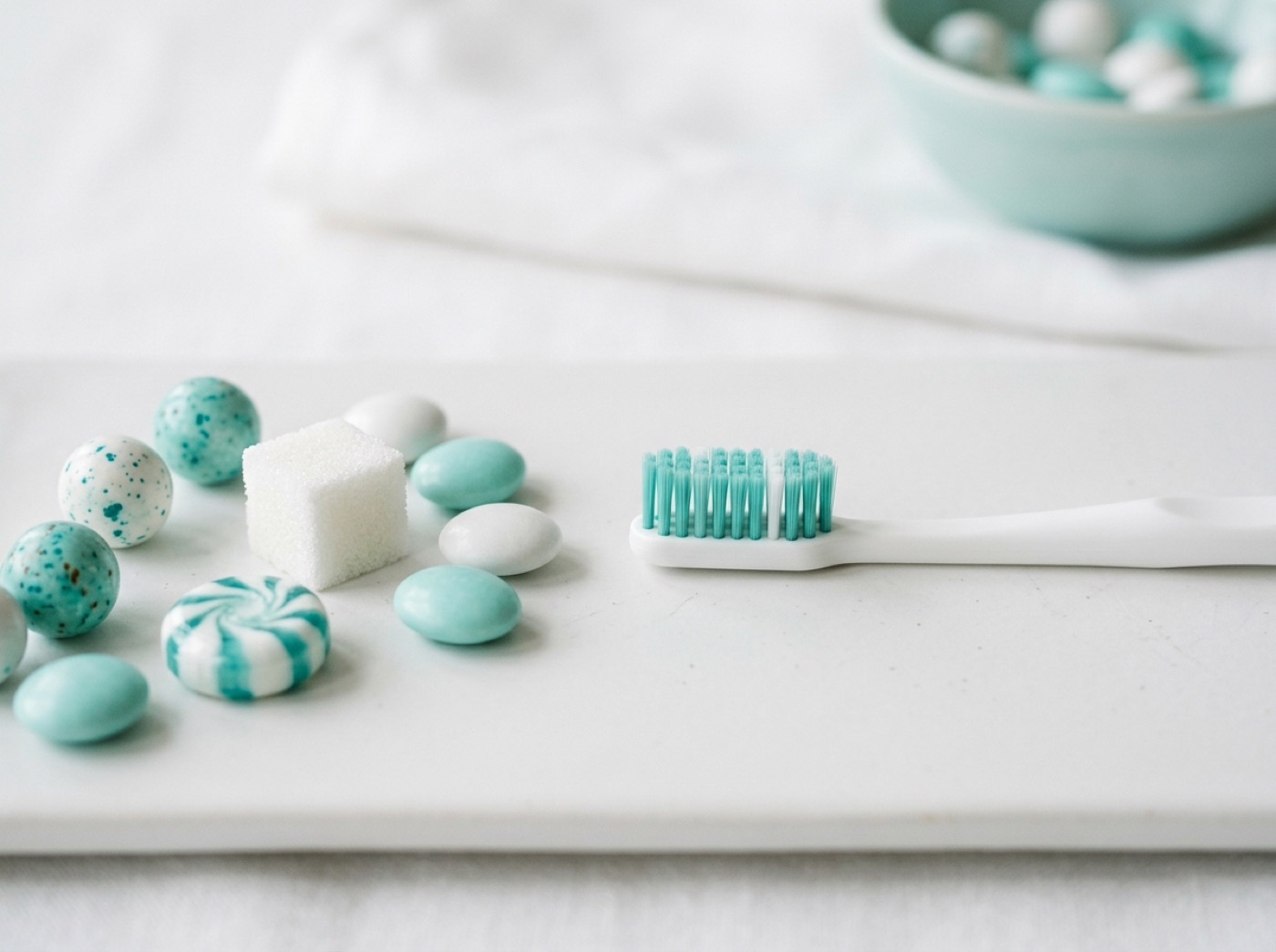
Almost everyone knows that sugar is bad for the teeth. But how exactly does it work, and do you really have to give up everything sweet? The answer is more nuanced than you might think. It mainly comes down to how often you have sugar and how well you care for your teeth.
How does a cavity develop?
Your mouth naturally contains many bacteria. Together with saliva and food remains they form plaque on the teeth. When you eat sugars or quick carbohydrates, these bacteria convert them into acids. Those acids dissolve minerals from the tooth enamel. If this happens over and over, the enamel weakens and in time a cavity can form, also known as caries.
Why does frequency matter most?
After every sweet moment the acidity in your mouth rises for a while. Saliva and fluoride then help the enamel recover. If you eat or drink something sweet throughout the day, the enamel gets too little time to recover. A slice of cake with your coffee is therefore often less harmful than an occasional sweet or sip of soft drink all day long.
Which foods and drinks raise the risk?
- Soft drinks, energy drinks and iced tea; even acidic and diet versions can affect enamel
- Fruit juice and smoothies, because of sugars and acids
- Sweets, biscuits and sticky treats that stay on the teeth for a long time
- Sweet snacks eaten throughout the day
- Sugar in coffee or tea that you sip slowly all morning
Practical tip: limit sweet moments to a few set times per day, preferably with a meal. Drink water in between and, if you like, use a straw for sweet drinks to reduce contact with the teeth.
How do you prevent cavities?
- 01
Brush twice a day Basics
Use a fluoride toothpaste and brush for about two minutes, in the morning and before bed.
- 02
Clean between the teeth Gaps
Use floss, interdental sticks or interdental brushes daily, because many cavities start there.
- 03
Limit the frequency Diet
Keep the number of sweet and acidic eating and drinking moments per day low.
- 04
Have regular check-ups Check-up
Your dentist can spot early problems and advise on protection such as fluoride.
Saliva is a natural protector. Sugar-free chewing gum can stimulate saliva production after a meal. A dry mouth, for example caused by medication, raises the risk, so discuss this with your dentist.
Can early cavities still recover?
At an early stage, when the enamel has only lost some minerals and there is no hole yet, it can sometimes recover with fluoride and better oral care. A true cavity no longer heals by itself and must be treated by the dentist. That is why early detection is valuable.
When is it wise to visit the dentist?
Make an appointment if you see white, brown or black spots on your teeth, have sensitivity to sweet, hot or cold, pain when chewing, or feel a hole with your tongue. Pain is not always a first sign, so regular check-ups are worthwhile even without complaints.
Frequently Asked Questions
IMPORTANT NOTE
This content is for informational purposes only; it does not substitute personal medical advice, diagnosis, or treatment. Your personalized treatment plan will be determined after a clinical examination by Mondzorg HS dentists.