



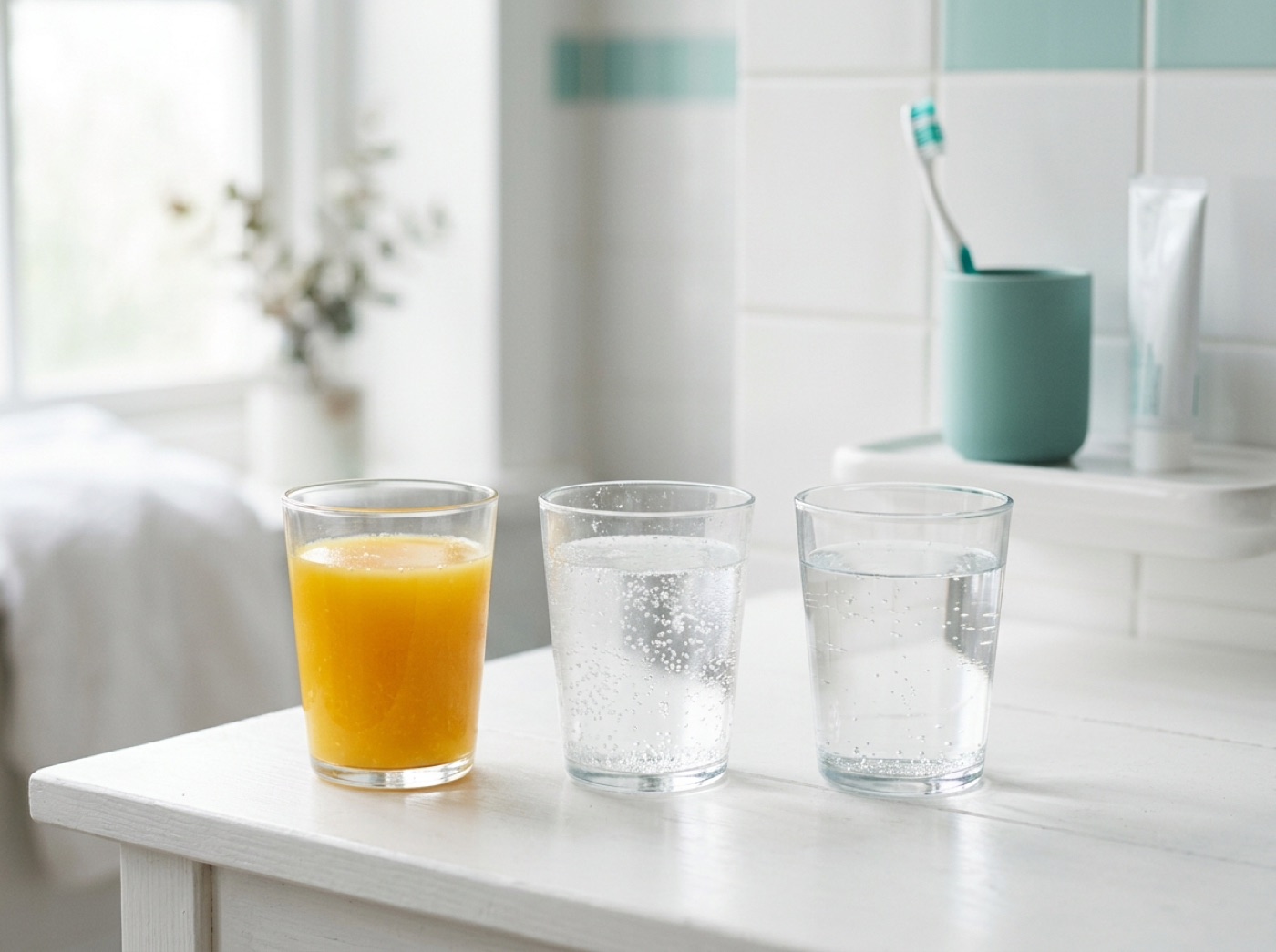
A glass of orange juice at breakfast or a sports drink after a workout feels healthy and harmless. Yet the acids in many drinks and foods can gradually thin your tooth enamel, often without you noticing right away.
What exactly is tooth erosion?
Tooth erosion is the loss of tooth enamel caused by acid, without bacteria being involved. This differs from a cavity, which is caused by bacteria and sugar. Enamel is the hard outer layer of your tooth and protects the sensitive tissue underneath. When drinks or foods lower the acidity in your mouth for a long time, the enamel becomes temporarily softer. If this happens again and again, the enamel can become permanently thinner. Enamel does not regrow the way skin does, so prevention matters more than repair.
Which drinks and foods are acidic?
Acid is present in more places than many people think. Sugar-free versions can be acidic too, because the acid often comes from flavourings or preservatives. Keep an eye on the following:
- Soda, including diet and sugar-free varieties
- Fruit juice, smoothies and lemonade
- Sports and energy drinks
- Vinegar, as found in dressings and pickled vegetables
- Citrus fruits and sour sweets
- Wine and other alcoholic drinks
This does not mean you can never have these again. How often and how you drink them determines how much damage occurs: a glass with a meal is different from sipping all day long.
What are the signs of tooth erosion?
At first, erosion often causes no symptoms. Later you may notice sensitivity to cold, hot or sweet things, teeth that look smoother, shinier or more translucent, small dents on the chewing surfaces and a yellower colour because the underlying tissue shows through more. Since these signs can have other causes too, an assessment by your dentist is the best way to find out.
How can you protect your enamel day to day?
- 01
Limit the number of acid attacks Frequency
What matters is how often the enamel is exposed. Drink acidic drinks with a meal rather than spread over the day.
- 02
Use a straw Straw
With a straw, part of the drink spends less time in contact with the front of your teeth. Swallow it rather than swishing it around.
- 03
Add some water Water
Water after an acidic drink helps dilute and rinse away the acid.
- 04
Wait before brushing Timing
Do not brush right after something acidic. Wait about 30 minutes so the enamel can recover and is not brushed away.
Practical tip: chew sugar-free gum after an acidic meal. It stimulates saliva production, and saliva helps neutralise the acid in your mouth.
What role does fluoride play in protecting enamel?
Fluoride helps make enamel more resistant to acid. Brush twice a day with a fluoride toothpaste. If you have sensitive teeth or signs of erosion, your dentist or dental hygienist can advise which additional products suit you. Problems such as acid reflux or frequent vomiting can also wear down enamel; discuss this with your dentist and doctor if it applies to you.
When is it wise to visit the dentist?
Make an appointment if your teeth become more sensitive, if you notice changes in shape or colour, or if you are concerned about your drinking habits. During a check-up your dentist can assess the condition of your enamel and discuss with you what makes sense in your situation. The earlier erosion is noticed, the better further wear can be limited.
Frequently Asked Questions
IMPORTANT NOTE
This content is for informational purposes only; it does not substitute personal medical advice, diagnosis, or treatment. Your personalized treatment plan will be determined after a clinical examination by Mondzorg HS dentists.