



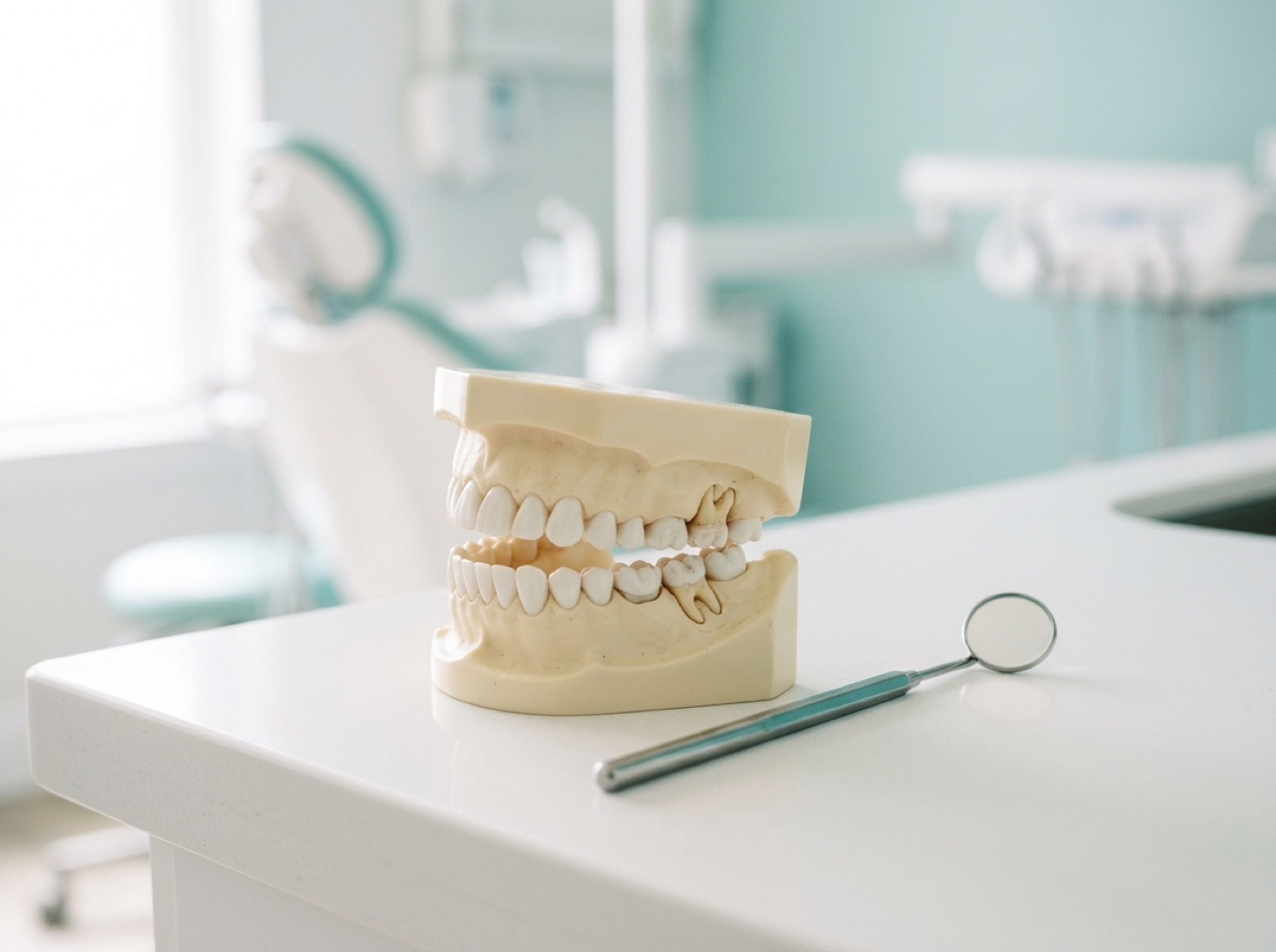
Around the age of twenty, wisdom teeth start to come through in many people. Sometimes this goes almost unnoticed, and sometimes it causes pain, swelling or infection. In this article you can read when a wisdom tooth can cause problems and what to expect from removal and recovery.
What are wisdom teeth and why do they cause problems?
Wisdom teeth are the back molars in the upper and lower jaw. They are the last to come through, often when there is little room left in the jaw. As a result they can grow at an angle, get stuck against the tooth in front or only partly break through the gum. These spots are hard to brush, so food and bacteria can build up.
Not every wisdom tooth causes trouble. A tooth that comes through well, is easy to reach and stays healthy can often simply stay in place. Your dentist assesses this during a check-up and, usually, with an X-ray.
When can a wisdom tooth cause pain?
- Swollen, red or sore gum around a partly erupted tooth
- An unpleasant taste or bad breath that does not go away
- Pain that spreads to the ear, jaw or throat
- Difficulty opening the mouth wide
- A cavity in the wisdom tooth or the tooth in front, because it is hard to keep clean
- Pressure on or shifting of the other teeth
Inflamed gum around a wisdom tooth is sometimes called pericoronitis. It can settle for a while and return later. Always have it assessed if it keeps coming back.
When is a wisdom tooth removed?
A dentist or oral surgeon mainly considers removal for repeated infections, pain, damage to the neighbouring tooth or a tooth that cannot come through properly. Removing wisdom teeth as a precaution is not necessary for everyone. The decision depends on your symptoms, the position of the tooth and your general health. Always tell your dentist which medication you use and whether you have any medical conditions.
How does a wisdom tooth extraction work?
Treatment is usually done under local anaesthetic, so you feel pressure but no pain during the procedure. If the tooth is easy to reach, extraction is often quick. If the tooth lies at an angle or under the gum, a small incision may be needed and the tooth is sometimes removed in pieces. The wound may then be closed with stitches. Your practitioner will discuss the options, the risks and any referral to an oral surgeon beforehand.
Recovery after extraction: what can you do?
Some swelling, a stiff jaw and a little oozing during the first days are common. Always follow the instructions of your own practitioner. The tips below are general.
- 01
Bite on the gauze Bleeding
Bite gently on the gauze you are given so the wound can close. Replace it as instructed.
- 02
Cool the cheek Swelling
During the first hours hold a cold pack against your cheek, with breaks, to limit swelling.
- 03
Do not rinse hard or suck Blood clot
Do not rinse vigorously on the first day and avoid straws. Suction can dislodge the blood clot.
- 04
Eat soft and lukewarm Food
Choose soft, lukewarm food for the first days and avoid hard, hot or spicy dishes.
- 05
Brush carefully Hygiene
Brush your other teeth as normal, but be gentle near the wound.
Practical tip: smoking and vaping slow down wound healing and increase the risk of a painful dry socket after an extraction. Ask your dentist how to handle this temporarily.
When is it wise to get in touch?
Contact your dentist if the pain increases after a few days, if you notice a bad taste or smell from the wound, if the bleeding does not stop, if you develop a fever or if the swelling increases strongly. Numbness that does not go away, or difficulty swallowing or breathing, also needs immediate help. If you have pain around a wisdom tooth but no appointment yet, have it checked before it turns into an infection.
Frequently Asked Questions
IMPORTANT NOTE
This content is for informational purposes only; it does not substitute personal medical advice, diagnosis, or treatment. Your personalized treatment plan will be determined after a clinical examination by Mondzorg HS dentists.